Proffee: does adding protein to your coffee actually do anything? The Australian numbers
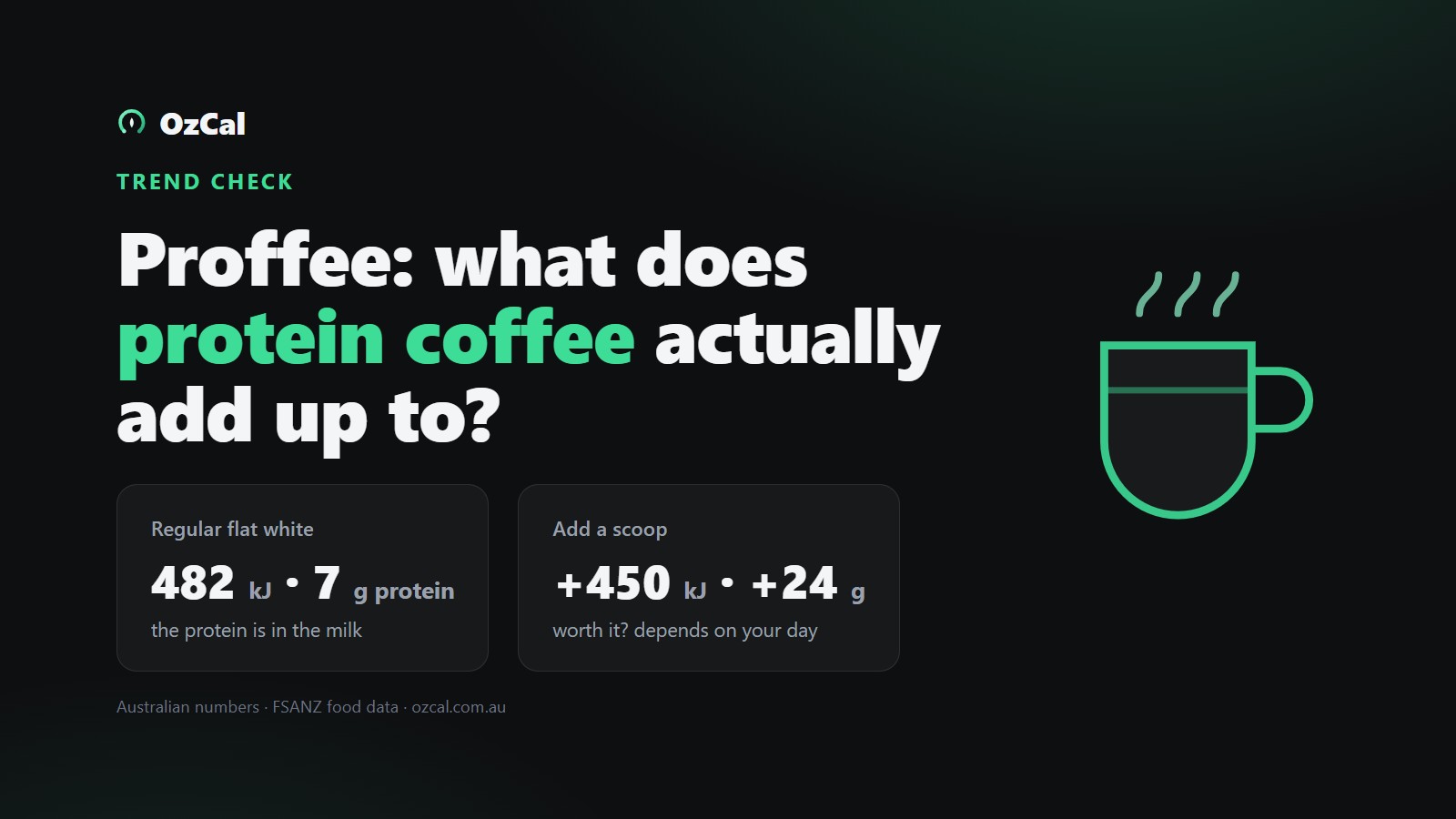
Proffee is protein coffee, and it is the drink trend of 2026. Here is the part the marketing skips: a regular flat white already has about 7 g of protein for 482 kJ, because the protein comes from the milk. A scoop of protein powder adds roughly 400 to 500 kJ on top. Most Australians already meet their protein needs, so for most people proffee is optional. It earns its place if you train, are over 70, or skip breakfast. The only way to judge a bottled one is the kilojoule figure on the panel.
What proffee is, and why 2026
Proffee is a blend of the words protein and coffee: an espresso, long black or iced coffee with protein added, either a scoop of powder, a protein milk, or a ready-to-drink protein latte. It started as a gym-bag hack and went mainstream this year. Through 2026 the big names moved in: instant protein lattes landed on supermarket shelves, protein espresso drinks appeared in the chiller, and Australian cafe chains added protein options to the menu. Market researchers now describe protein coffee as one of the fastest-growing functional-drink categories of the year.
The idea is sound on paper. Coffee is a daily habit for most Australians, and breakfast is usually the lightest protein meal of the day, so adding protein to a drink you already buy is an easy win. The question is whether the version in your hand is actually delivering protein, or just charging you more for a milkshake with an espresso shot in it.
Your flat white already has protein
The protein in any milk coffee comes from the milk, not the coffee. A black coffee has effectively none: a long black is under 20 kJ and no protein. Add milk and the number moves. A regular 240 mL flat white with full cream milk is about 482 kJ and carries roughly 7 g of protein. Switch to skim and you keep that protein while dropping to about 300 kJ, which is the best protein-to-energy deal of the common cafe milks. Almond milk is the lowest in kilojoules at about 218 kJ, but it also drops the protein to under 1 g, so an almond latte is close to a protein-free coffee.
Kilojoules and protein in a 240 mL flat white, by milk
One regular cup. Protein comes from the milk, so skim keeps the protein and cuts the energy; almond cuts the energy and the protein.
Source: FSANZ Australian Food Composition Database, held in OzCal's catalogue. Regular 240 mL cup, typical Australian cafe size. See the full flat white kilojoule guide.
Show the numbers
| Milk | Energy (240 mL) | Protein |
|---|---|---|
| Skim | 300 kJ | ~7 g |
| Reduced fat | 370 kJ | ~7 g |
| Oat | 454 kJ | ~2 g |
| Full cream | 482 kJ | ~7 g |
| Soy | 499 kJ | ~6 g |
| Almond | 218 kJ | <1 g |
So before anyone adds a scoop, a normal milk coffee is already a 7 g protein drink. A large 360 mL flat white pushes that to about 11 g on its own. If you drink two milk coffees a day, that is most of a protein snack you are not counting.
DIY proffee: what a scoop actually adds
The classic home version is an iced coffee made with milk and a scoop of protein powder. The milk is doing real work here. A cup of regular milk already brings about 8.5 g of protein for roughly 700 kJ, and skim keeps that protein for closer to 300 kJ. A scoop of protein powder on top typically adds around 20 to 25 g of protein and about 400 to 500 kJ, depending on the brand.
That can be a genuinely strong drink: a skim-milk iced coffee with a scoop can land near 30 g of protein. But it is not free, and it is not magic. If you are already eating enough protein across the day, that scoop is extra kilojoules and extra cost doing a job your lunch was going to do anyway. If your breakfast is usually just coffee, it is one of the easier ways to turn a drink into something closer to a meal.
If the goal is cheap protein rather than a protein label, a scoop of powder is rarely the best value. Tinned tuna, eggs, milk and legumes usually cost far less per gram of protein. See our protein-per-dollar ranking for the order that actually wins at the checkout.
Is it worth it? The honest answer
For most Australians, proffee is a nice-to-have, not a need. The 2023 national survey found that 98.5% of adults already meet their protein requirement, with the median man eating about 1.5 times his recommended intake and the median woman about 1.6 times hers. We went through the full picture in how much protein you actually need. If you are in that 98.5%, adding protein to your coffee does not do much beyond what your normal meals already do.
There are real exceptions. Protein genuinely helps if you do regular resistance or endurance training, if you are over 70 and holding on to muscle, if you are pregnant or breastfeeding, or if you simply struggle to eat much in the morning and your coffee is standing in for breakfast. In those cases, building the protein into a drink you were having anyway is a sensible, low-effort habit. For everyone else, the honest read is that proffee is a preference, not a fix, and the bigger national gap is fibre, not protein.
How to read a protein coffee
If you are buying a ready-to-drink protein coffee, two numbers on the panel settle it: protein per serve and energy (kilojoules) per serve. A good one gives you a decent slug of protein for an energy figure not far off a normal milk coffee. A weak one is basically a flavoured milk drink with a small protein claim and a flat white's worth of kilojoules or more. Australian products must show kilojoules by law, so there is nothing to convert and nothing to guess.
A quick rule of thumb: if the drink gives you at least 15 g of protein and sits under about 800 kJ, it is pulling its weight. If it is under 10 g of protein and over 1,000 kJ, you are mostly buying a milkshake. The same test works for protein cereals, bars and yoghurts: a tub of plain Greek-style yoghurt brings about 9 g of protein per 100 g for roughly 400 kJ and no marketing, which is why it quietly beats a lot of the protein products next to it on the shelf. For a breakfast comparison, our Weet-Bix kilojoule guide runs the same maths on the cereal aisle.
Get the OzCal Weekly
One email a week: the nutrition story everyone is talking about, checked against Australian data, plus one cheap meal idea. Free. Unsubscribe any time.
Know your own number
Whether proffee is worth it comes down to one thing the trend cannot tell you: how much protein you are already getting. A week of logging usually answers it. OzCal shows protein next to kilojoules for every food and drink you log by barcode, photo or voice, from a database of 94,000+ Australian and New Zealand foods, so you can see whether your coffee habit is already covering you before you pay extra for a protein version.
See what your coffee is really adding up to
OzCal logs meals and drinks by photo, barcode or voice against 94,000+ Australian foods, kilojoules first. Free on iPhone, on the App Store now.
Common questions
What is proffee?
Proffee is protein coffee: espresso or iced coffee with added protein, either from a scoop of protein powder, a protein milk, or a ready-to-drink protein latte. The name is a blend of protein and coffee. It took off in 2026 as brands launched protein coffee products across Australian supermarkets and cafes.
How much protein is in a flat white?
A regular 240 mL flat white with full cream or reduced fat milk has about 7 g of protein, because the protein comes from the milk, not the coffee. A large 360 mL cup has about 11 g. A black coffee has none. Almond milk drops it to under 1 g.
Is proffee worth it?
For most Australians it is optional. The 2023 national survey found 98.5% of adults already meet their protein needs, and a normal milk coffee already carries about 7 g. Proffee is useful if you train, are over 70, or struggle to eat enough in the morning. Otherwise check whether the extra protein is worth the extra kilojoules and cost.
How many kilojoules does adding protein to coffee add?
A scoop of protein powder adds roughly 400 to 500 kJ on top of the coffee. A ready-to-drink protein latte varies widely: some are close to a flat white, others are closer to a milkshake. The only way to know is the kilojoule figure on the panel, which every Australian product must show.
What is the best coffee for protein without the kilojoules?
A skim milk flat white keeps about 7 g of protein for roughly 300 kJ, the best protein-to-energy ratio of the common cafe milks. Full cream keeps the same protein for 482 kJ. Almond milk is lowest in kilojoules but has almost no protein.
Want the next one in your inbox?
One email a week: the nutrition story everyone is talking about, checked against Australian data, plus one cheap meal idea. Free. Unsubscribe any time.
Sources
- ABS, Usual nutrient intakes 2023 (released 17 March 2026): 98.5% of adults meet protein needs
- NHMRC Nutrient Reference Values for Australia and New Zealand: Protein
- FSANZ Australian Food Composition Database (AFCD), milk and coffee values used in every table
- GlobalData, "Proffee goes mainstream as consumers redefine coffee around energy, protein and convenience" (2026)
- YourLifeChoices, "Proffee: how more Australians are upgrading their morning brew"